
Sand Hills: The Extraordinary Beauty of a Coherent System
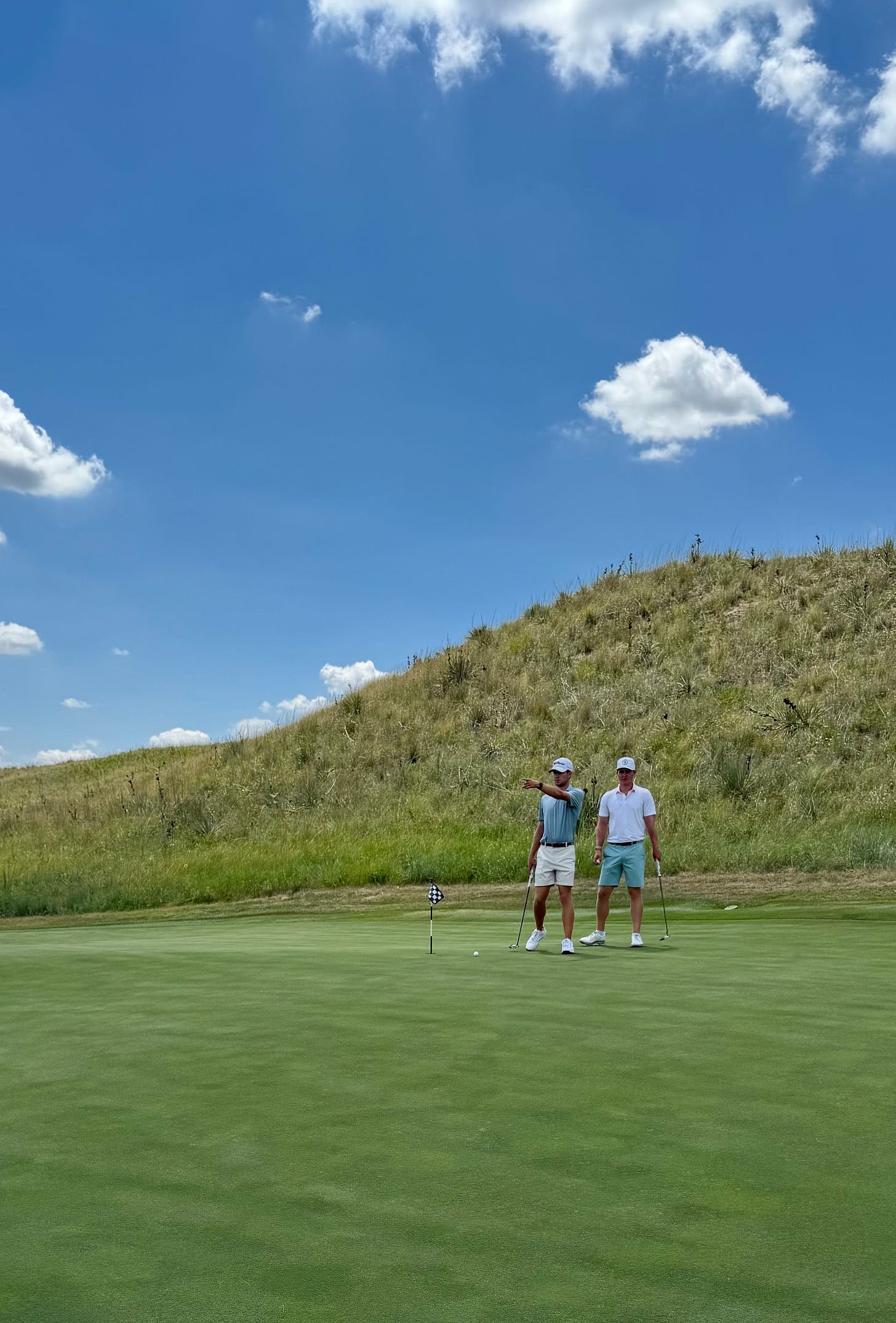
We watched the others take off from North Platte, Nebraska. Then my son Harris and I got in the car and started east toward Lincoln, where he had a Monday qualifier for the Korn Ferry.
About three hours. Flat road, fields of corn on both sides. Neither of us said much for a while.
I had spent the previous three days wanting the place we just left to be more than it is, but at the same time loving everything it was.
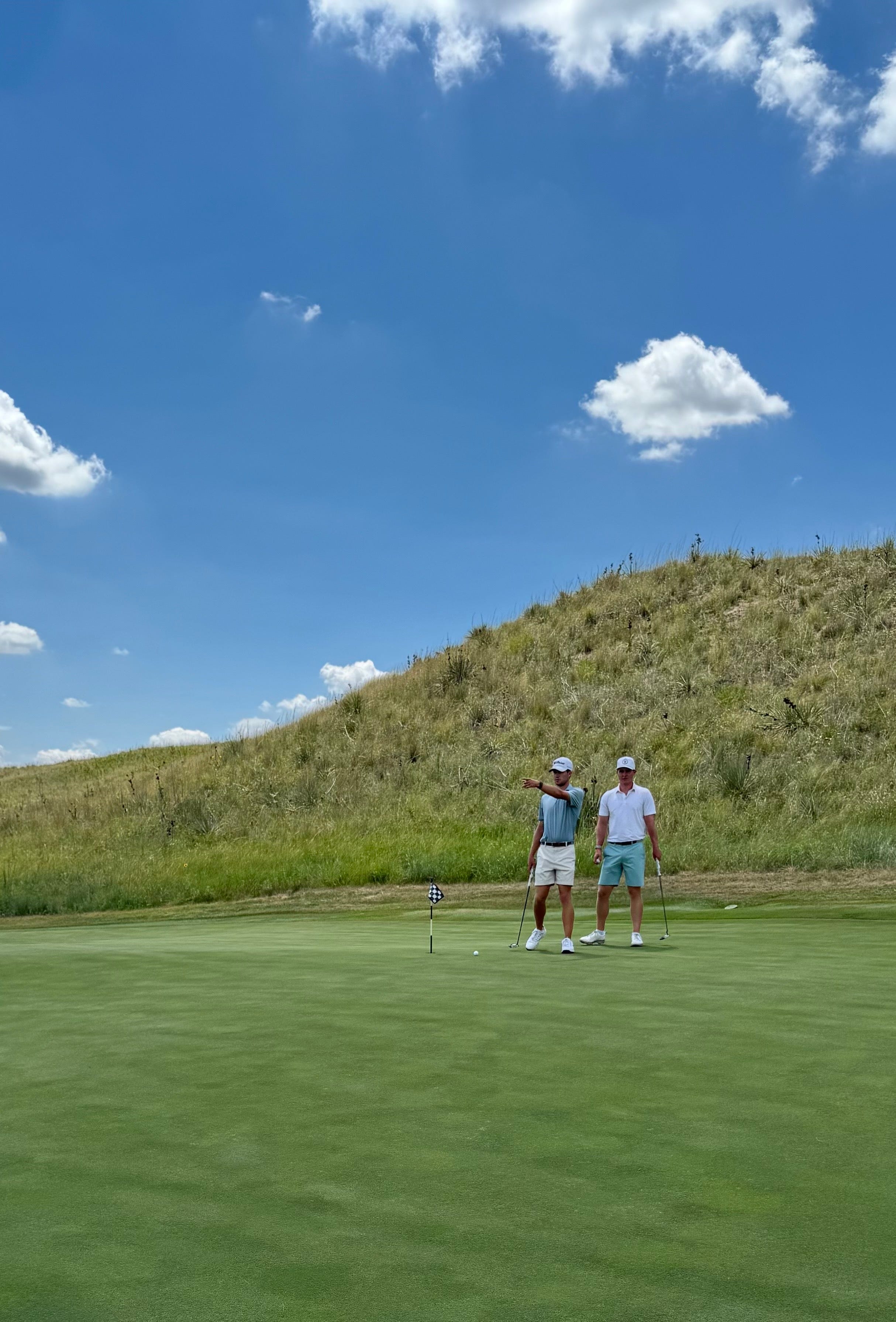
Sand Hills Golf Club sits outside Mullen, Nebraska, which means the middle of nowhere. Population about five hundred. Nearest major airport is two hundred and fifty miles away. We were there because Harris and his friend William had recently finished college and are soon entering professional golf. William’s father David and I wanted to mark it somehow. David has a relative who is a member, and he hosted all of us.
I am an average golfer at best these days. I did not go out with anything to prove. But I arrived the way everyone arrives, having traveled a long way, expecting the golf to be extraordinary and everything around the golf to be extraordinary too.
The course is a mile from the clubhouse. What you find out there is a starter’s cabin, a small deck, and the golf course.
No par three course. No putting course. The range is a range, and you get a handful of balls to warm up. No short game complex. No practice bunker. The clubhouse is modest and the locker room is more modest than the clubhouse. No cell or wifi service.
The club owns eight thousand acres. They could have put a par three course by the river. But, thirty years into that opportunity, they have not.
At the halfway house a man named Cody makes lunch after your round. Hamburger, chicken, brat, hot dog. Four things. The hamburger may be the best I have ever eaten. I hope it isn’t, because I am not sure I will ever have it again.
One of the members flies in on a Gulfstream fairly often. The plane is worth many times what it cost to build the golf course. He stays in the same cabins. He eats in the same dining room. At lunch he picks one of Cody’s four things. Same experience.
Here is what it cost to build that golf course. For a typical modern course, developers need to move somewhere between half a million and a million cubic yards of dirt – so it routinely costs tens of millions of dollars to build. Sand Hills, in contrast, moved about four thousand cubic yards of dirt, spent only roughly a million dollars, and made one of the most stunning courses in the country.
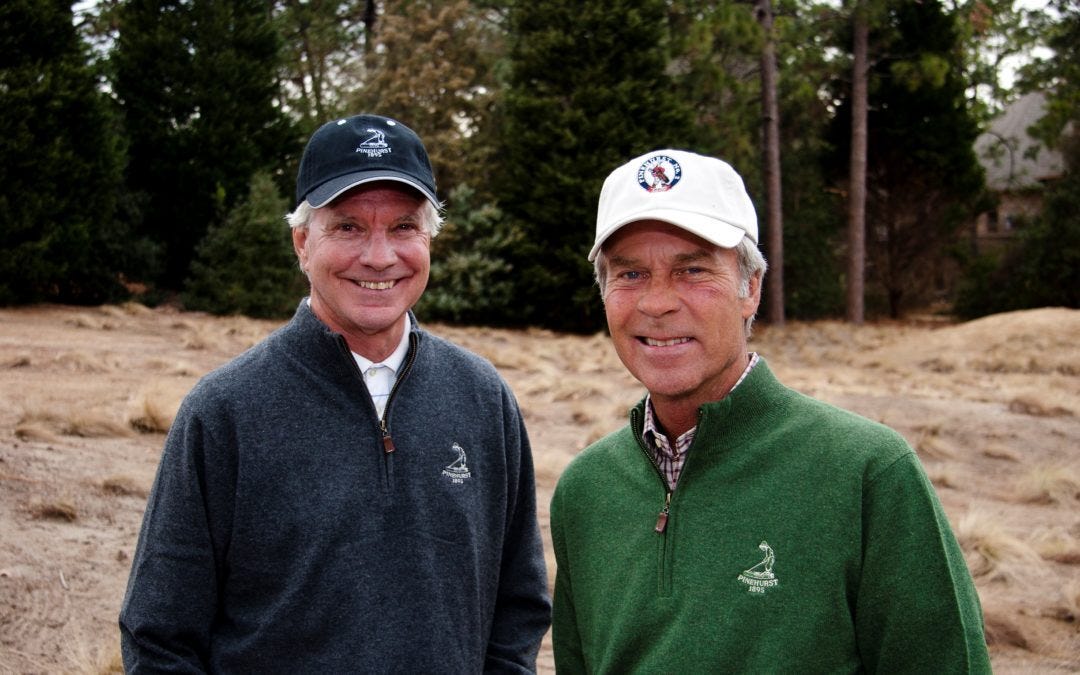
Bill Coore and Ben Crenshaw, the architects, spent more than two years walking a thousand acres of sand dunes, flagging naturally occurring fairways and greens. They identified over a hundred and thirty holes that could be built on that land. There is a story that the course’s developer, Dick Youngscap, once said they were not designing a golf course – they were discovering one. Most of the time after that went into deciding which eighteen belonged together.
There’s a term in golf course architecture called routing coherence, referring to the seamless sequencing of eighteen holes across a landscape. The phrase struck me, because it is also a pretty apt description of what I have been writing about for the last three years.
A coherent system is one whose parts hold together because the architecture underneath allows them to function as a connected whole. Sand Hills is a coherent system. And the constraint architecture that makes it coherent is visible in almost every decision Coore and Crenshaw made.
They did not arrive in Nebraska with a vision for what they wanted to build. They arrived with a willingness to work with what was already there. They walked the dunes for two years and let the land dictate where the holes were. A CBS reporter once said the course is so subtle, if it were not for the flagsticks, you would not know it is there.
That is humility in the sense I mean it, when I write about constrained systems thinking. Humility isn’t about modesty or good character; it’s an honest orientation to the reality of the system you are working with, rather than the system you wish you had.
But the discovery was not passive. Coore and Crenshaw had to identify a hundred and thirty holes and then eliminate a hundred and twelve of them. Some of those eliminated spots were probably extraordinary on their own. The demand for routing coherence required them to sacrifice individual excellence for systemic coherence. Choosing what’s realistic and right for the system requires a kind of humility that most designers, and most operators of any system, never exercise.
Now consider the wind, because that is where everything changed for me.
There is no prevailing wind at Sand Hills. It just blows, from different directions, every single day. We had a south wind the first two days. A modest wind for that area, which still means more than most people are used to. The course was wonderful. I played well enough not to embarrass myself or my son.
The last day the wind came out of the north.
They hand you a card that morning with the hole handicaps changed. Not the yardages. Not the pars. The ranking of the holes by difficulty. It gets adjusted to the conditions, because somebody makes that decision every morning. I had never seen that anywhere.
I expected the course to stop working. That is what happens to most golf courses when conditions move away from what they were built for. They do not get harder. They get stupid.
Every hole was harder that day. But not one of them stopped making sense.
That is friction doing its job. The wide fairways, the generous approaches, the dunes and blowouts left in their raw state – those are deliberate design elements that look like limitations from the outside. But they are what let the system adapt. The course was designed around the constraint of variable wind the way a good investment framework is built around the constraint of uncertain markets. You do not try to predict the wind. You build a system that holds together regardless of which direction it comes from.
Finally we got to my favorite hole, the seventeenth. Short par three, wind down and across. Standing on the tee I knew how it was going to go wrong. The ball would try to rise, the wind would press it down, and I would end up short with an uncomfortable pitch. I could see the whole thing before I swung.
I hit it to twenty feet.
That hole was harder than anything I faced all week. It still made sense. I could tell when I was wrong and when the wind was wrong, because the course kept me oriented. Par is 71 out there. It was not 71 that day, for anybody, even William and Harris. Everyone knew it, including whoever moved the handicaps around before we teed off.
And then there is pacing. Coore and Crenshaw spent two years walking the site before they built anything. Two years, in a profession with clients and investors who want to see dirt moving. A faster timeline would have produced a course designed from a helicopter survey and a topographic map. What they got instead, by moving at the rate the land required, was a course that golfers describe as an adventure from the first hole to the last.
On the drive to Lincoln, Harris said it was probably the best course he has ever played. He was careful about it. Not his favorite, though it was up there. The best. He has thought about golf and course architecture more than anything else in his life. When he has something to say about it, I listen. I asked him why.
He said he liked being made to hit shots he was not sure he could hit. He said it was a course you could play every day and never get bored. He said it the way you say something obvious. Then he went back to looking out the window.
His embrace of uncertainty changed everything I had concluded in my mind. I had spent three days deciding where I’d put the par three course. Down by the river, with a bigger clubhouse to sit and look at the course from. A putting course. A range where you could work on your game.
I had the whole thing laid out in my mind. And I never once asked whether any of it would make the golf better.
Almost everything we add to a system is added simply to make us more certain. That is what a practice facility is: a place to become sure before it counts. It is what the extra meeting is, and the second opinion, and the additional time, and the app that tells you how you slept. None of it is foolish. Much of it works.
But certainty cannot be bought with attention, and attention is exactly what you need when you cannot be certain.
In any system, the individual pieces can be excellent without the system being coherent. A company can have brilliant people and a broken culture. A portfolio can have winning positions and no structural integrity. A life can be full of good decisions that do not add up. Coherence is the architecture that lets the parts hold together under conditions you did not choose.
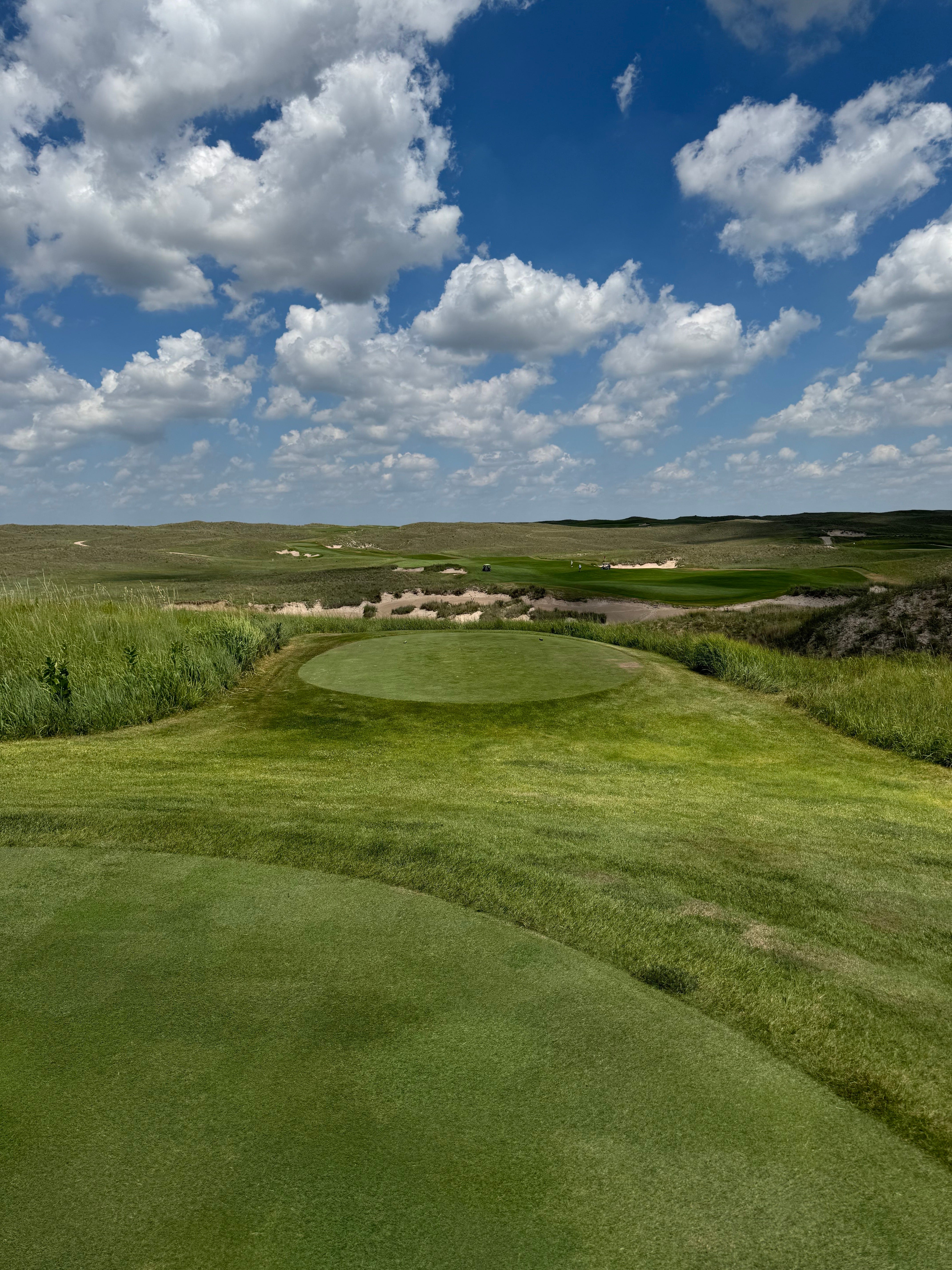
Sand Hills is one of the greatest courses ever made. Not in spite of the constraints that built it, but because of them.
Because humility kept the designers oriented to what was actually there. Because friction, in the form of the wind and the land and the limitations of the budget, gave the system the resistance it needed to become something that endures. Because pacing, the willingness to move at the rate the land required rather than the rate the timeline demanded, let the architecture reveal itself.
Coore and Crenshaw never picked a wind to build for. That cost them any chance of making a single day perfect, but it also gave them a course with no condition it cannot hold.
Harris and William are heading into a version of this game that is about making a living. Ranking, tour status, money, the pressure of whether it works out. All of it real, and none of it the reason either of them started playing.
Sand Hills has none of that. No leaderboard, no gallery, nothing to prepare a version of yourself for. Just the ground, the wind, and the game you brought.
Neither of them will get many more days like it.
One more thing about the wind: I never really heard it, the whole time I was there. I felt it constantly, three days of it, in my hands and against my body and in every decision I made about a golf shot.
The only place it made a sound was near the windmills.
There is nothing else out there for it to hit.
Thank you for reading Wondering Aloud.
Steve Barth, CFA
Wondering Macro LLC